I wanted to get this off my mind before one more Black History Month rolled around. While Harriet Tubman and Sojourner Truth and Rosa Parks and Mary McLeod Bethune were great Sheros and played a tremendous role in getting us from there to here, there are thousands and thousands of others that never get mentioned. We should know that there were courageous women foot soldiers involved in our struggle from the very beginning of the Disaspora. From the slaveship. On the plantation. During the Civil War. Reconstruction. Retrenchment Post-Reconstruction. During Jim Crow. There were women on the front lines with Martin Luther King, et al fighting segregation. It is a bastardization of American History when
all American stories and triumphs are not told.
There is an ancient African proverb that I quote often: "Until the Lion writes his own story....The tale of the hunt will always glorify the hunter." I also subscribe to the African belief that one's essence/spirit never dies as long as one person remembers them and keeps their memory alive. Today I will be the Lion and keep alive the memory of just a few sheros that I wish more people talked about.
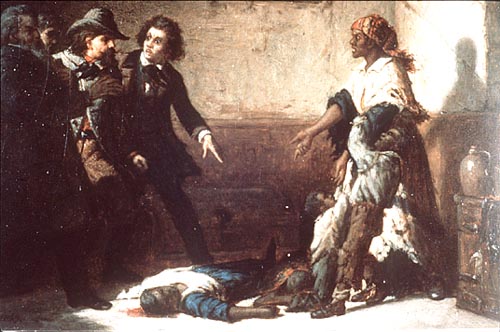
 Margaret Garner's
 story is known to many of us on a very superficial level. Toni Morrison's novel
Beloved is based on a moment in this courageous slave woman's life. Oprah Winfrey's movie
Beloved is based on Toni Morrison's book. The sad story of this slave woman is fascinating. In 1856 she, her husband, 4 children, and 11 others fled their Kentucky plantation in the dead of winter. Nine eventually made it to Canada and freedom, but Margaret, her mother in law, father in law, husband, and 4 children did not. When it was obvious that the house they were hiding in was surrounded by those that would take them back to slavery, Margaret declared that she would kill herself and her children rather than allow any of them to return to slavery. She was successful in killing one of her daughters before she was overpowered, captured, and tried in a court proceeding. Read more about her
here . 
And few know that
Irene Morgan, not Rosa Parks, was probably one of the first to defy the segregated seating policy. She refused to give up her seat on a Greyhound Bus in Gloucester, Virginia in 1944. Read more about her story
here.  Ella Baker
. What can I say about her? She was truly the power behind the throne. Her leadership skills and willingness to work in the background probably kept SCLC together during some of its most crucial times.
She was inspirational to many and sadly overlooked by many in the telling of the struggle for Civil Rights in America.

And how many of us know that the phrase "sick and tired of being sick and tired" was made infamous by
Fannie Lou Hamer?

Who would have thought that an uneducated Black woman who worked as a sharecropper in Mississippi would change the way delegates would be seated at the Convention of the Democratic Party. Wow. Talk about speaking truth to power! She gave all for what she knew to be right. I honor
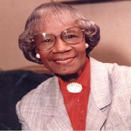
her here. Shirley Chisholm.

What can you say about a Black woman who made a serious bid for the Presidency of the United States at a time when almost all around her were not very supportive? And she did not back down on any of the issues. She was an insightful, intelligent, caring, bold woman who just happened to be Black in addition to being a politician. I have a feeling she would have been unbought and unbossed no matter what profession she had chosen. I am glad
she chose
politics. 
And what can be said about the courage of
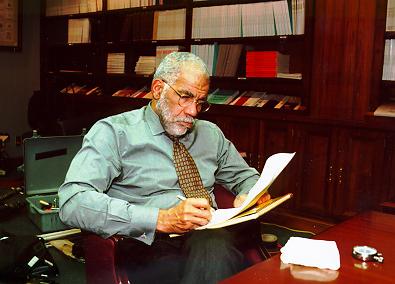
Bunnatine Greenhouse except You Go Girl!!!!!

The Spoils of War
By MICHAEL SHNAYERSON Mar 12, 2005
Michael Shnayerson is a Vanity Fair contributing editor
Halliburton subsidiary KBR got $12 billion worth of exclusive contracts for work in Iraq. But even more shocking is how KBR spent some of the money. Former U.S. Army Corps of Engineers official
Bunnatine Greenhouse is blowing the whistle on the Dick Cheney linked company's profits of war. This time, she was sure, they were going to get her. Bunnatine Greenhouse had been a huge nuisance since the buildup to the war in Iraq-questioning contracts, writing caveats on them in her spidery script, wanting to know why Halliburton and its subsidiary KBR (formerly known as Kellogg, Brown and Root) should be thrown billions of dollars of government business while other companies, big and small, were shut out. And Bunny Greenhouse wasn't that easy to ignore: she was the highest-ranking civilian at the U.S. Army Corps of Engineers (USACE). Specifically, she was the officer in charge of ensuring that any work contracted out by the Army Corps to private industry-from help in building bridges and dams and highways to support for wartime troops-was granted in a fair and aboveboard way. For two years, Greenhouse had asked hard questions about why the head of the Corps, to whom she reported directly, kept giving exclusive, non-compete contracts to KBR that now amounted to roughly $10.8 billion. Greenhouse was fearless, and she was blunt. In the Corps's male hierarchy, it probably didn't help that she was a woman-or that she was black.
On October 6, 2004, Greenhouse was summoned by the Corps's deputy commander, Major General Robert Griffin. She knew that the top brass was eager to finalize the Corps's latest contract for KBR, a $75 million extension for troop support in the Balkans. Already it had gone through several drafts, mostly because Greenhouse kept questioning the rationale for giving it to KBR without competitive bidding. What she didn't know was that her superiors had closed ranks against her. When Greenhouse entered the general's office, he handed her a letter that explained she was being demoted for poor performance-a curious indictment, given that she'd received high performance ratings before the war. The demotion would knock her down to the government rank of GS-15. That was like going from senior vice president in a Fortune 500 company to middle management. She could retire instead with full benefits if she liked, the letter went on to say. She was, after all, 60. Greenhouse chose a third alternative: she hired a lawyer and began to fight. All through last year's searing presidential campaign, the mere mention of Halliburton stirred fury and bitterness in the blue states. How, Democrats asked, had the Houston-based oil-and-gas conglomerate won all those deals to provide services to troops in Iraq? What role had Dick Cheney played behind the scenes, given that the vice president had been Halliburton's C.E.O. from 1995 to 2000, walked away from the job with an estimated $35 million, and continues to get six-figure deferred-salary compensation from the company, despite his denials that he does? True, Halliburton's $12.5 billion division KBR had expanded over the years from oil and gas to do lots of government work: about half of its 60,000 employees in 43 countries handle military needs, from building bases to serving food. But other companies-Fluor for one, Parsons for another-service the military, too. Why hadn't they been considered? Worse, KBR appeared to have mismanaged the work it got. At various hearings of the House Committee on Government Reform last year, ranking minority member Henry Waxman (a Democrat from California) turned livid as he detailed charges of reckless spending, chaos in the distribution of supplies, and profiteering by KBR executives-charges less often refuted than shrugged off. Waxman had gotten many of his talking points from a plucky group of whistle-blowers: contract staffers and truckdrivers who'd worked for KBR in Iraq. Their view was from the ground, with startling allegations of how KBR operated-and operates still-on a day-to-day basis in the war zone. Greenhouse, though, is the first to offer that view from a top-down perspective. The picture that emerges when her account is added to the others is of a company much like the law practice in John Grisham's novel
The Firm: a rogue operation, with corrupt management, cynically conning the federal government as it rakes in billions of ill-earned taxpayer dollars. Greenhouse knows how KBR got those contracts in the first place. She also thinks she knows why. Not surprisingly, Greenhouse is a bit late one evening in Washington when she bustles into the offices of her lawyer, Michael Kohn, with an armload of documents. She's still at her job, having invoked protection under the whistle-blower law of 1989, which keeps federal employees from being fired or demoted until an investigation is conducted. Between doing her job and preparing her case, she's got a lot to juggle. Broad-shouldered and ebullient, Greenhouse radiates the conviction of her faith as a charismatic Catholic. She's sung in a Sunday church choir her whole adult life, and it's easy to imagine her there: she's the one in the back row with the booming voice. "Back in 1970, God impressed upon me that I was to be a fisher of men," she declares. "I didn't know what that meant. But now it's all falling together. Something good is going to come out of this. And more people who are lost right now are going to come into His fold."
Greenhouse has an up-by-the-bootstraps, all-American story. She was raised in the segregated cotton town of Rayville, Louisiana. Her father never made it to third grade. But he operated the steam compress in the middle of town that turned picked cotton bolls into bales, so he was, as his daughter recalls, an important figure in the community. He and his wife, a fervent Bible reader, urged their six children to strive for excellence, and that they did. Most earned advanced degrees.
Bunny was valedictorian at Baton Rouge's Southern University and went on to acquire three master's degrees, all related to her work at the Corps. One of her brothers chose to excel in basketball. No one who follows the game has forgotten the Washington Bullets' and Houston Rockets' Hall of Famer, Elvin Hayes. In 1965, Bunny married her college sweetheart, and when Aloysius Greenhouse became an army procurement officer-overseeing the purchase of supplies and services-she followed him on postings around the country and in Europe, teaching high-school and college math as she went. The only time they were apart was when her husband went to Vietnam, serving in the infantry-two tours, Silver Star. Eventually, Bunny went into procurement herself, for both government and industry. In 1997, General Joe Ballard, the Army Corps's first black chief engineer, brought Greenhouse in as the Corps's top procurement officer. He wanted her to shatter the cronyism that had led to bad contracts, and so she did. At the Corps, as at other government agencies, senior officers often leave for cushy jobs with the very companies they negotiated with on the government's behalf. Especially the biggest ones, such as Halliburton and Parsons. Greenhouse's mission was to be sure some of the pie was saved for small and minority-owned businesses. That wasn't just policy-it was the law. Greenhouse had to sign off on every contract valued at more than $10 million. On no less than 50 of the documents she signed, she added clauses and conditions to make sure the law was upheld. There was grumbling from the start, and after Ballard, her mentor, left in 2000, she says, underlings started chopping big contracts into parts worth less than $10 million to try to evade her scrutiny. She could deal with that. But then came the war in Iraq, with its promise of glittering profits. And suddenly everything changed. "The meeting was in the Pentagon-one of those really secure rooms," Greenhouse recalls. The date was February 26, 2003, three weeks before the Iraq invasion. The Army Corps's Lieutenant General Carl A. Strock was there; Greenhouse says he was the one who would lead the campaign to ax her 20 months later. There, too, were representatives from Defense, State, USAID and others, several dozen in all. A major item on the agenda was deciding which outside contractor would get the multi-billion-dollar job of putting out the oil-well fires that Saddam Hussein's troops would presumably set once the invasion began, and then getting the wells operating again. The project was to be known as RIO, for Restore Iraqi Oil. Several U.S. companies had the know-how. Texas-based GSM Consulting, for one, had done such work in the wake of the Gulf War. Yet the assumption in the room was that KBR had the job-an assumption underscored by the extraordinary presence of KBR representatives at the high-level government meeting. "They came in late-it was a snow day," Greenhouse recalls. "I was just flabbergasted."Greenhouse knew that the previous fall KBR had been paid $1.9 million to draft a contingency plan for how RIO should unfold. But that was reason enough not to let KBR do RIO. It was strict protocol in the procurement business that the contractor who drew up the contingency plan for a job should not be allowed to bid on the job itself: he'd know the exact budget and other details that would give him an unfair advantage. Yet here was KBR sliding into the job without an eyebrow raised-precisely because, as the participants at the meeting agreed, it was the only company that met the criteria outlined in its own contingency plan! To Greenhouse's greater shock, the senior officers and the KBR representatives around the table spoke of a sole-source, non-compete contract that could last five years. In the first of many detailed responses to Vanity Fair, KBR notes that the Government Accountability Office (G.A.O.) concluded that the RIO contract was "properly awarded." But the G.A.O. also concluded that the $1.9 million contingency plan on which RIO was based was improperly awarded. Worst of all, the contract would be "cost-plus": KBR would just submit bills for whatever it spent, and the government would reimburse it, adding fees of between 2 and 7 percent as KBR's profit. It didn't take a genius to see that the more money KBR spent, the more profit it would make. KBR says that its award fee of up to 5 percent on RIO is based in large part on its ability to control costs. But the G.A.O. has concluded that KBR let costs spiral out of control. Incensed, Greenhouse went over to whisper in Lieutenant General Strock's ear that the KBR people had to leave the room. The general complied with her request, but seemed adamant that KBR get the job on the grounds of "compelling emergency." All Greenhouse could do was insist that the contract be limited to a year.The next day, the final contract was submitted to Greenhouse for her approval. The basic terms-five years, non-compete, cost-plus-remained. Greenhouse signed-the country was, after all, on the eve of war-but only after writing, "I caution that extending this sole source effort beyond a one year period could convey an invalid perception that there is not strong intent for a limited competition." (In light of the pending investigation into Greenhouse's charges, the Army Corps declined to comment on any details of her case.)
To KBR, the contract was potentially worth $7 billion-just the start of its business from the war in Iraq. There were signs, though no proof, that Vice President Cheney, or someone in his office, had played a part in tipping RIO to KBR. Certainly, his office had been informed of the decision to award the RIO contingency plan to KBR. Michael Mobbs, a political appointee who reported to Undersecretary of Defense for Policy Doug Feith, acknowledged to Congressman Waxman's staff that he had relayed the news that KBR would prepare the RIO plan to various White House officials in an October 2002 meeting. One of those officials was I. Lewis "Scooter" Libby, Cheney's chief of staff. (A Cheney spokesman, Kevin Kellems, subsequently told The Washington Post that Libby had kept Cheney out of the loop about the decision to use KBR for the plan.) And Time would unearth an Army Corps e-mail stating that the contingency plan had been "coordinated" with the vice president's office. As The Wall Street Journal reported, Halliburton executives then met directly with Cheney's staff. KBR, for its part, says the vice president had nothing to do with any of its Iraq contracts.Greenhouse herself saw another dynamic was at work. "I think what this was all about was that Rumsfeld had made very negative statements about the Corps," she says. Rumsfeld saw the Corps as a bunch of geeky engineers, mostly tinkering with public works in the U.S. He'd actually raised the idea of sliding the Corps over to the Interior Department, which oversees all federally owned lands. That was anathema to the Corps, in name and tradition an integral part of the U.S. Army. So Lieutenant General Robert B. Flowers, at that time the Corps's chief engineer, made it his goal to show Rumsfeld what the Corps could do. "He was pushing everything that he could to get the Corps in the limelight," Greenhouse says. So eager was he, Greenhouse believes, that Rumsfeld saw Flowers could be used.Ordinarily, the Department of Defense would have coordinated the RIO contract. But Rumsfeld, Greenhouse theorizes, wanted to put some political distance between Defense and a sole-source contract for KBR that could prove embarrassing, even as it pleased the White House. So the Corps was willing to be used as the vehicle to push this through and have Halliburton get the $7 billion contract.The Corps, Greenhouse thought, would take the heat for giving RIO to KBR, and in the process play a larger role in Iraq. With any luck, it would show Rumsfeld it was worthy of remaining in the U.S. Army. A Defense spokesman calls the theory far-fetched. "The Secretary of Defense can't do that on his own. Congress would have to be involved, the president would be involved, it would be a decision by the administration."To everyone's surprise, the Iraqi oil fields sustained hardly any damage, from either U.S. bombs or Saddam's troops, in the "shock and awe" invasion of March 2003. So there wasn't much RIO for KBR to do. Gamely, the company suggested it change its job to handling Iraq's immediate fuel needs: bringing in truckloads of gasoline from Kuwait for military and civilians alike. That was fine with the Corps.The other surprise was that U.S. troops couldn't just leave the country they'd conquered. They had to stay, and be housed and fed. That meant a lot more work for KBR, which already had a lucrative contract for troop support in the Balkans—a type of contract known by the awkward acronym of LOGCAP—and had persuaded the Corps to draw up a similar one for Iraq.
Marie deYoung, one of the whistle-blowers who would later cooperate with Congressman Waxman, came to believe soon after her arrival in Kuwait as a logistics specialist for KBR, in December 2003, that LOGCAP had an almost built-in potential for chaos, abuse, and graft.Dark-haired and lively, deYoung seems far younger than her 50 years, talking a blue streak as she sketches a life that's taken her from orchestral conducting to social work for the U.S. Army to the seminary and back to the army again, with time out to write or co-write two books (
This Woman's Army and
Women in Combat) and be a television and radio commentator on social issues in the military. Thorough and seemingly tireless, she promises to follow up on a first interview by sending documents by e-mail. By day's end, she's sent 24 e-mails, with documents attached to each one.DeYoung hadn't intended to go to Kuwait at all. She had signed on for Kosovo, where KBR needed lots of procurement help, too. There for three months, she got an up-close look at KBR's model in action. This was the way the new, outsourced army was supposed to work. In the aftermath of ethnic cleansing, when order had been restored to the Balkans, KBR had won its first LOGCAP contract: it would supply everything that occupying U.S. forces needed, from tents and mess halls to swimming pools and generators. The federal government would be trimmed, private industry would profit, soldiers would be snappily serviced. The original architect of this plan was Dick Cheney, then assistant secretary of defense under President George H. W. Bush. LOGCAP was a huge boon to KBR and its parent, Halliburton. Just four years later, Cheney was Halliburton's C.E.O.In Kosovo, deYoung saw, the plan had worked-up to a point. KBR had fixed war-torn cities in record time. It had employed local vendors, who acquired new expertise. To newcomers, KBR liked to show a documentary of the work it had done in the Balkans. It made for stirring footage, especially with the theme song of its booming soundtrack, "We Built This City (on Rock and Roll)," by the 80s schlock-rock group Starship.DeYoung did notice something curious about this Utopian model. Army commanders came and went every six months or so. What they wanted was some project they could point to as the pride of their time: a new swimming pool for the troops, or heated tents. KBR could do that for them. So most commanders happily signed off on the sort of expensive projects that Bunny Greenhouse would come to call "gold-plated"-projects that KBR could cost-plus-bill to the U.S. government. In any event commanders would be gone soon enough; KBR's employees were the ones who remained. So, as deYoung observes, "who's in control?" This was the model that got KBR the big contracts in Iraq. But hiring a bunch of local Arab vendors in the midst of a war that kept metastasizing wasn't as easy as building a city on rock 'n' roll.DeYoung, who earned $8,800 a month "for a 90-hour work week," flew to Kuwait on December 14, 2003-the day that Saddam Hussein's capture was announced. She was sent immediately to Camp Udairi, a U.S. military base near the Iraq border, to update 27 KBR subcontracts for work being done at the camp. Her first surprise was that most of the contracts had nothing to do with servicing U.S. troops. They were all about servicing KBR. "Building houses for itself, building separate gyms and rec centers from what the army had- " (KBR says that all its work in Kuwait and Iraq is done at the direction of the U.S. Army.) DeYoung found the 27 subcontracts in chaos-goods unaccounted for, invoices paid without documentation-because the KBR staffers who'd drawn them up were incompetent, she felt. Most had no bookkeeping skills and were there because of family connections.By late February, deYoung had begun working in KBR's LOGCAP office at the elegant Persian Gulf-front Khalifa resort, just outside Kuwait City. There she oversaw a much larger pile of 519 KBR subcontracts that appeared to her to be in no better shape than the ones for Camp Udairi. (A company spokesperson observes that KBR had gone from supporting 25,000 troops at 7 base camps to 211,000 U.S. and coalition troops at more than 60 camps on very little notice, an extraordinary challenge.)It was at the LOGCAP office that deYoung saw how well KBR managers in Kuwait were living. They stayed in expensive waterfront hotels in Kuwait City and its environs at more than $100 a night per room. They availed themselves of hotel laundry service, even while KBR was paying outrageous prices to a subcontractor for laundry. And when they left their hotels, they didn't carpool or take buses. They'd requisitioned expensive-brand S.U.V.'s for themselves. DeYoung did some number crunching and came up with the figure of $73 million a year. That, she concluded, was what KBR was spending for its top managers in Kuwait City to live so well. More accurately, that was what U.S. taxpayers were paying-not including the extra 2-to-3-percent profit that came with the cost-plus system. (KBR says only a few managers are in off-base housing and that those in hotel rooms are routinely doubled up. DeYoung says the only people who stayed two to a room were men with girlfriends, "often the lesser paid Balkans girls.")What were the KBR managers actually doing there? Not overseeing construction projects, or kicking the tires of convoy trucks they'd brought in to supply the troops, or looking at blueprints for new army bases in Iraq. According to deYoung, they weren't doing any of that. They were sitting in their hotel rooms, or out on their waterfront balconies, giving the nod to subcontractors to do all the work. (KBR says it "self performs" some jobs and subcontracts others.) Once a subcontractor was hired, the KBR team had no idea whether goods or services were delivered, deYoung asserts. The team just paid whatever invoices the subcontractors submitted, and hoped for the best. (KBR calls this a "ridiculous claim" and says that all goods and services must be verified before invoices are paid. DeYoung says that's simply not true, and e-mails a blizzard of documents from her time in Kuwait to support her case.)Back in Washington, Congressman Waxman had been raising a stir about KBR's runaway costs in Iraq, so by the time deYoung reached the LOGCAP office a "tiger team" of senior KBR managers had flown over from Houston to Kuwait City for an intense examination of how the company was managing the job. The tiger team, deYoung recalls, had an odd way of pursuing the problems.Instead of demanding accountability from all the local vendors to whom KBR had doled out contracts, the "old men," as deYoung puts it, sat by the pool, not at their desks. "Their objective was not to set up clean accounts or justify costs," deYoung explains. "Their No. 1 objective was to close the books because they were operating under the assumption that if the books were closed they wouldn't be subject to auditing." In that, they may have been right: when teams of Defense auditors finally reached Kuwait, in the winter of 2004, to start questioning contracts, they focused only on the open, ongoing ones. DeYoung says the closed ones were ignored. KBR says that government auditors audit contracts whether they're open or not.The tiger team was a "social gang," deYoung says, and "insiders were rewarded with fancy digs-and promises of promotion." To stay in the gang, you had to play the game-seeing that contracts were awarded to the favored contractors. Proper contracting called for competitive bidding. But according to deYoung that's not the way the gang did it. "Typically, the high-ranking guy would go to a young, inexperienced person and use him to award this contract to the subcontractor of choice," deYoung explains. "If the young person refused, he'd be threatened: 'You have 24 hours to make a decision.' If he was adamant, he'd either be sent home or to Iraq. Which was to say they'd put his life in danger." In the subcontracts department, deYoung adds, KBR went through 12 managers in one year. "When you got too close to what was going on, you got moved." KBR denies this, saying any turnover was likely due to the demands associated with working long hours in a war zone.What was going on?"The subcontractor would come in with bills for four or five times the expected cost," deYoung explains, "which had to do with under-the-table payments."In November 2004 the Pentagon would launch an investigation into allegations that two Halliburton employees in Kuwait had accepted bribes from third-party contractors, and the company would announce it had terminated its relationship with the subcontractors in question. A company spokeswoman, Wendy Hall, would say, "We are doing everything we can to make sure this particular scenario doesn't happen again." But deYoung says that that might be hard, given that a tone was set from the top.
KBR chairman Jack Stanley was forced to leave the company in June 2004 for what Halliburton vaguely termed violations of business conduct. He is said to have received "improper personal benefits" involving a Swiss bank account which French investigators say contained $5 million in bribes for KBR contracts in Nigeria. Both the U.S. Justice Department and the Securities and Exchange Commission have launched formal investigations.To deYoung these incidents seemed all too typical. She never saw money change hands. But her bosses' reaction to questions she brought up about the 519 subcontracts she was assigned left her deeply suspicious. "When I said this work was not done or there's missing equipment, I was told that was too much information," deYoung says. "They really just wanted enough information so they could bill the U.S. government." She adds, "It makes no sense that people who were presiding over this-were not willing to fix the problems. And these inflated costs! Any normal manager would want to keep costs down, not inflate them." KBR says deYoung was a clerical assistant with no oversight responsibility, but deYoung has scores of e-mails proving she did in fact vet subcontracts to confirm that work had been properly billed.
One of the most blatant examples of misspending deYoung says she found involved a Kuwaiti company called La Nouvelle. The 519 subcontracts dumped in deYoung's lap added up to $l.8 billion. La Nouvelle's contracts accounted for $400 million of that and dealt with everything from construction equipment to transportation to dining facilities. But what was La Nouvelle? Its two principal managers, Ali Hijazi and Ahmed Al Homoud, describe it as a Kuwaiti-registered company, started in 1997, that provided supplies to U.S. armed forces and oil-field operations. But to deYoung it seemed defined much more by its third focus, interior design, and by Al Homoud's American-born wife, Wendy Stafford, who often represented it. La Nouvelle had no trucks of its own, or warehouses, or dining facilities. It merely hired local subcontractors and took a middleman fee. But it did know how to do that, and goods did get delivered-at prices that seemed to yield very healthy profits. DeYoung recalls Stafford in elegant, tight clothes, with expensively teased hair and "lots of jewelry-diamonds, diamonds, diamonds." One of the La Nouvelle contracts that caught deYoung's eye was for laundry-laundry, that is, for all contractors and military at a nearby base. The bill, she says, "went from $62,000 a month to $l.2 million a month-over about 60 days!" Given the number of people whose laundry was being done, deYoung figured that on average a 15-pound bag was costing $108. At the same time, KBR was paying $28 a bag under a different contract at another site-to La Nouvelle! "When they chose to cut a clean contract, they were quite capable of doing that," deYoung says. "And when they chose to make a contract messy, they could do that too." (La Nouvelle spokeswoman Jennifer Thomas replies that deYoung's $108 estimate is incorrect, and that La Nouvelle is unaware of the other contract to which deYoung refers.)On March 16, 2004, deYoung met La Nouvelle's troika of top personnel for the first time-Stafford, Al Homoud, and Hijazi-and asked the group for documentation on the expensive laundry contract. Stafford and the others said there wasn't any. (In retrospect, La Nouvelle says, they don't know what documentation deYoung was referring to, nor does their subcontractor.) DeYoung says she'd already found the paperwork herself, and it had taken her about a minute on a calculator to conclude that KBR and La Nouvelle together were overcharging on the laundry by about $1 million a month. By her estimate, the monthly bill should have been $200,000, not $l.2 million. When deYoung showed her documents to Hijazi, he e-mailed a powerful ally for help: a KBR vice president who wasn't in procurement, deYoung says, and should have had no say over the contract. But the V.P. was a top KBR manager in Kuwait. "Within 24 hours, I was told I was off the La Nouvelle account." Last June, Halliburton spokeswoman Wendy Hall declared to the Houston Chronicle that the company's own auditing system had raised concerns about La Nouvelle, and that La Nouvelle as a result had been "removed from consideration for future work." La Nouvelle, on the other hand, claimed it was owed hundreds of millions of dollars by KBR. On October 15, 2004, La Nouvelle filed suit in a Virginia federal court, seeking at least $224 million in compensation and other damages.In May 2004, deYoung came home. She'd seen a lot, and felt she'd had enough. Her one regret was that she hadn't gotten into Iraq; as a former soldier, she'd desperately wanted to do that. And so she didn't see what it was like to work for KBR on the ground in Iraq, day after day.
But James Warren and David Wilson did.Warren and Wilson were two of the hundreds of truckers who signed on for Iraq duty with KBR in the fall of 2003. Patriotism was one draw, adventure another. And the money wasn't bad: with premiums for working in Iraq, combat duty in a convoy, and overtime, a driver could earn about $8,000 a month. Like their fellow civilian recruits, they started in Houston with a three-week orientation. For Warren, 48, a Nebraska-born ex-navy man who drives his own rig, the doubts began there."Things didn't seem right to me from the first day in Houston," Warren recalls, speaking to Vanity Fair by cell phone from his truck on an all-night drive through half a dozen southwestern states. "The amount of money being spent on these drivers, recruiting them! Every job I've ever had, I stayed at a Motel 6 or Days Inn. These were $200-a-night hotels. And they didn't even put two people in a room with two beds." His KBR recruiter kept saying, "We're spending about $10,000 on each of you in orientation." Warren says, "So taxpayers were paying hundreds of thousands of dollars before KBR even found out if I was a felon or not."The honeymoon ended in Iraq, when Warren and some of the other recruits were shuttled to the U.S. military base known as Camp Cedar, south of Baghdad. Now they were put in big tents, with 50 to 60 people to a tent. And yet, for KBR's managers, Warren noted, the perks kept on coming."My first day at Camp Cedar, I noticed flatbed trucks were bringing brand-new S.U.V.'s, like Toyota Land Cruisers, Hummers, 4Runners-some of the most expensive S.U.V.'s that money can buy. I saw hundreds of them going to Iraq." The S.U.V.'s weren't hauling anything, Warren says. They were just for KBR personnel to ride in from base to base. They had power windows and CD players. "You don't have CD players in a car in wartime," Warren says wonderingly. On such delicate vehicles, desert conditions were brutal. "Within 90 days," he says, "they were completely trashed."Warren's job was to haul supplies on an almost daily basis from Camp Cedar north to Baghdad to Camp Anaconda-a distance of about 300 very dangerous miles. He realized pretty quickly that the KBR people in charge of loading up the convoys had no experience in trucking."A majority of the goods we transported were transported the wrong way," Warren explains. "You can't haul paper towels and napkins on a flatbed when it's raining and there's no tarp. We lost millions of dollars of goods that scattered on the roads. Pants, boots, shirts, water. And we couldn't stop to pick that stuff up. We told KBR time and again, You can't haul this stuff on a flatbed-you need it in a container. But they never did change. And what happens is, when you start losing things that way, you attract Iraqis. We had people following convoys so they could pick up stuff that fell off the truck." A lot of Iraqis, unfortunately, were more aggressive than that. David Wilson, 50, a Florida-based trucker who'd served in the U.S. Coast Guard, became head of the convoy in which Warren was driving. Wilson was a natural leader the others came to trust. But he could hardly control what the Iraqis felt-or did. "The Iraqis love to throw rocks-stoning is still a big thing over there," Wilson says wryly. They'd try to slow the trucks down, then jump on the trailers. Wilson expected "the danger part," as he puts it. But from the start, he says, KBR made a bad situation much, much worse by doing nothing to maintain the trucks. "These trucks were going through severe duty," Wilson says. "When we started requesting maintenance and couldn't get it, I knew that would be a problem." One day, Wilson's truck simply shut down and stopped on the road. Its fuel filter, a $7 part, was clogged. Fortunately, Wilson was just outside the gates of a military camp when it happened. "If that had happened a mile from where it did, there's a very good chance you and I wouldn't be having this conversation," Wilson says. "Over a $7 fuel filter." (KBR says its truck maintenance from the start was "adequate," and that it has since improved.) By late December 2003, trucks in the convoy began breaking down. There were a few extra trucks, but those began breaking down, too. The KBR managers told Wilson and his posse to fix the ones they had as best they could and keep on driving them. Wilson and Warren did that until one day in March 2004, when, to their astonishment, both were fired.That July, at the congressional hearing where both Wilson and Warren testified, a KBR supervisor said the truckers were fired for running Iraqi-driven cars off the road with their trucks. "I did do this," Warren says. "But Halliburton management had told us to do it!" Wilson agrees. "We were told when we went to Kuwait that we were to do whatever we could to protect the integrity of the convoy. Even if it meant running people off the road." A KBR project manager for transportation later testified that the army, which made all decisions about KBR convoy security, "does not direct KBR drivers to run civilian vehicles off the road."Both Warren and Wilson had become whistle-blowers after a staffer for Congressman Waxman saw them quoted in an Associated Press story about convoys in Iraq and got in touch with them. Warren says he came forward without hesitation. "I just felt the taxpayers should be aware of the money being spent on this operation, and how much was being wasted."Wilson says he testified for the same reason, though at the House Government Reform Committee hearings Chairman Tom Davis, of Virginia, and other Republicans regarded the truckers with withering skepticism. They showed no more respect for Marie deYoung, who had come home with stacks of incriminating e-mails and decided to contact Waxman's office on her own. "The accusations leveled by the whistle-blowers against KBR," declared Chairman Davis in his opening statement, "both in their written testimony and through personal interviews, are either in some cases, flat-out wrong or minor or a naive or myopic view of contracting in a wartime environment."Yet, as Waxman observed in his own opening statement, the whistle-blowers' testimony squared with reports from three government organizations: the Defense Contract Audit Agency (D.C.A.A.), the Iraq Coalition Provisional Authority's Office of the Inspector General, and the U.S. G.A.O. "All three audit agencies," Waxman declared, "have told us Halliburton is wasting our money."After the whistle-blowers testified, Alfred Neffgen, KBR's chief operating officer for government operations for the Americas, appeared before the committee to answer their charges. He acknowledged mistakes had been made. But, he said, the war made everything very difficult. "Under these conditions, no one should expect the assembling and complicated logistics would be the epitome of pristine precision."
Bunny Greenhouse did not testify that day before Congress: she hadn't become a whistle-blower yet. Instead, she was still trying to make KBR accountable from the inside, by doing her job and questioning contracts. But she says she was encountering more and more resistance from her colleagues at the U.S. Army Corps of Engineers. Since December 19, 2003, in fact, the climate in the office had turned arctic. That was the day the battle over KBR's fuel-price gouging in Iraq came to a head.In the invasion's aftermath, KBR had begun importing fuel into Iraq from Kuwait as part of its revised charter for the $7 billion RIO contract. To do so, it had hired an obscure Kuwaiti subcontractor called the Altanmia Commercial Marketing Company, which had no experience in fuel procurement or transportation. An e-mail that turned up later from the U.S. Embassy in Kuwait would refer to the Altanmia arrangement as a "sop" to the U.S. government.Altanmia had delivered the gasoline-but at an average price of $2.65 per gallon. That was well over twice the rate that Iraq's State Oil Marketing Organization (SOMO) was paying-an average of 97 cents a gallon-for gasoline imported from the same Middle Eastern countries that Altanmia had tapped. (KBR's Neffgen would testify that only northern Iraq could get cheaper fuel, from Turkey, but Waxman's investigators would determine that SOMO supplied southern Iraq as well, at less than $1 a gallon.) KBR was paying Altanmia's invoices without complaint, while it was getting reimbursed by the U.S. government-at cost-plus. By the end of September 2003, the D.C.A.A. (the Defense Department's own auditing office) would conclude, KBR had paid as much as $61 million more than it should have—and passed those costs on to U.S. taxpayers. (KBR says the army ordered it to buy gas from Kuwait, and that Altanmia had the lowest price. But Waxman's investigators say the bidding was done by phone, in a single day, and that industry leaders were not invited to participate.)Why had KBR paid so much for gasoline? An e-mail located by Waxman's office reported an August 2003 meeting between Altanmia and U.S. Embassy officials in which an Altanmia official complained bitterly that it was "common knowledge" that KBR managers solicited bribes, "that anyone visiting their seaside villas at the Kuwaiti [sic] Hilton who offers to provide services will be asked for a bribe." According to this version, Altanmia officials would pay generous bribes to KBR to keep the gas contract going, then get their money back by jacking up the price per gallon. KBR could then just invoice the U.S. government at $2.65 per gallon and get reimbursed at cost-plus. (KBR says any implication that its managers were extorting kickbacks from Altanmia is "an absolutely unfounded lie.")Yet other e-mails suggested the U.S. Embassy, not KBR, had played a leading role. On December 2, 2003, after Halliburton and the Army Corps actually proposed using other, less expensive suppliers for fuel in view of the pressure that the Pentagon and various lawmakers were bringing to bear, then U.S. ambassador to Kuwait Richard Jones sent an e-mail to an unidentified U.S. official saying, "Tell KBR to get off their butts and conclude deals with Kuwait NOW! Tell them we want a deal done with al-Tanmia [sic] within 24 hours and don't take any excuses. If Amb. Bremer hears that KBR is still dragging its feet, he will be livid." Jones was also Bremer's right-hand man at the Coalition Provisional Authority, the U.S. interim government of Iraq. An embassy spokesman released a statement at the time saying the embassy had played no part in the selection of Altanmia and had not pressured the Army Corps in any way.By mid-December 2003, KBR was under intense pressure from the D.C.A.A. to document how and why it had signed on with Altanmia for fuel at $2.65 a gallon. That's when it turned to the Army Corps of Engineers for help.As the contracting agency, the Corps had the unique power to decide it didn't want to see KBR's paperwork, and to waive KBR's obligation to show that paperwork to anyone else. Why would the Corps want to do that? To this day, Bunny Greenhouse isn't sure. All she knows is that on December 19, 2003, her colleagues approved the waiver behind her back.By then, the Corps had assigned her a new deputy. Not a civilian deputy; a military one. "Because they can control the military," Greenhouse explains, referring to her superiors. "They can't control civilians like that, because civilians are going to say, 'I can go to jail.'" Greenhouse says that her new deputy, Lieutenant Colonel Albert A. J. Castaldo, was "promised all sorts of things if he would come in and disrupt my office and get Bunny Greenhouse out of this job." In this, she says, he was encouraged by the chief of engineers at that time, Lieutenant General Robert B. Flowers, who had advised his staff to take decisions into their own hands when necessary. Flowers went so far as to have a "Just Do It" card printed up and handed out. In an internal memo that Castaldo later sent to one of his superiors, he acknowledged what his command group had said "Just Do It" meant. "It was discussed, well known, and even expected by the USACE Command Group that I would have to take adverse positions against Ms. Greenhouse's desires in order to protect the command and accomplish certain actions for the best of the command mission. It was fully understood that I would have to exercise the 'Just Do It' card to accomplish my mission for the command." For weeks, Greenhouse says, Castaldo hung around her administrative assistant's desk, craning for glimpses of Greenhouse's appointment book so he could tip his superiors to any time she'd be away from the office. On December 18, 2003, Greenhouse sent a slip saying she was sick with bronchitis and would be home the next day.On the 19th, the KBR waiver was drawn up in the Corps's Dallas office-a necessary first step because that office was assigned to oversee the RIO contract. Contracting Officer Gordon A. Sumner signed it. (Sumner declined to speak with Vanity Fair in view of Greenhouse's legal dispute with the Corps, and a Corps spokesman made clear that no other Corps officers could cooperate either.) It was then flown up-that day-to Washington to be signed by Lieutenant General Flowers. Ordinarily, the waiver would have been logged into the Corps's computer system and given a tracking number. But it wasn't. That way, Greenhouse's assistant couldn't detect its lightning passage through government channels and notify Greenhouse at home. Greenhouse says that no mention of the waiver was made to her by Flowers or anyone else upon her return to the office, so she didn't find out that it had been granted until early January, when it made the news.As a result of the Corps's secretly granted waiver, the Pentagon investigation into KBR's fuel surcharges ground to a halt.The Corps couldn't fire Greenhouse directly; senior Corps officials are unfireable. But she could be demoted, if her colleagues laid the groundwork carefully enough. By the fall of 2004 they'd done just that. And when Greenhouse ignored warnings not to block the next no-bid KBR contract with her spidery script, they got her at last.Since 1999, KBR had earned nearly $2 billion in the Balkans as the sole-source supplier of housing, food, and other needs for U.S. troops stationed there. As the contract's term had wound down, the Corps had made a halfhearted attempt to let other companies bid on the job. Greenhouse was all for that: in a candid report, she'd concluded the contractor was "out of control," manipulating military command changes to push through ever more expensive items. But in July the bidding process was inexplicably curtailed; to this day, Greenhouse says, she has no idea why that was done. Instead, Lieutenant General Strock, the new chief of engineers, decreed that KBR should be granted a $75 million extension of the job until April 2005. Greenhouse objected. She pointed out that the rationale for granting the extension-"compelling urgency"-would never hold up to scrutiny when the army had had five years to bring in other bidders. Apparently Strock realized she was right. On the contract's final version, in early October, KBR was deemed the "one and only one source" that could do the job even though the Corps had just spent months entertaining other bids. Once again, Greenhouse objected, in a strongly worded e-mail to Strock.Apparently, that e-mail was the last straw. The next day, she was demoted. In the letter explaining this action, Strock informed Greenhouse her two most recent performance ratings had been "less than fully successful." Greenhouse believes this was the groundwork the Corps had to establish in order to get her out of the way. Performance ratings are issued annually, and two negative ones are necessary for punitive action to be taken. Greenhouse's colleagues had waited two years for that, and acted as soon as it happened. The two recent annual reviews dramatically contradicted Greenhouse's earlier ones, copies of which her lawyer, Michael Kohn, showed to Vanity Fair. For her first year-October 1997 until October 1998-Greenhouse was described as "absolutely committed-totally loyal." She "has no equal when it comes to technical issues," the report said. On a rating basis from one to five, with one being the highest grade, Greenhouse was given a two that first year. On each of her next two annual reviews, she earned a one, with many more glowing remarks. Yet on the review signed by Lieutenant General Flowers on July 15, 2003, Greenhouse was accorded a four. And on the one that ended September 30, 2004, she got a five.Kohn is hoping to be heard by the Corps's Equal Employment Opportunity Office (E.E.O.), on the grounds that Greenhouse has a "mixed case" involving not only bureaucratic inequity but racial and gender prejudice. "The fact is that a black female had so much power in the institution, more than the Corps's good old boys' network ever envisioned, because the Corps is essentially a contracting organization, so the commanders should really be taking a backseat to professional contractors. But they had found a way around that, and Bunny was standing in their way."
The E.E.O. review could lead to a jury trial, which is what Greenhouse wants. Who will pay her legal bills is another question. "We hope to start a defense fund," Kohn says. "And some of this may have to be pro bono and contingency."To the Corps's top brass and their cronies at KBR, Greenhouse may not be the irritant she was, but other government bureaucrats are asking them pointed questions, too. Last year, a Pentagon audit found that KBR could not document more than $l.8 billion worth of work done under its LOGCAP contract in Iraq. At first the army considered withholding payments, but the prospect of bitter court battles led it to try to negotiate a settlement. Ordinarily, a contractor would be asked to come up with documentation for its claim-to date, Halliburton has charged the government $9.5 billion for LOGCAP work in Iraq. The government would then respond with its own documentation, and the two parties would reach a compromise figure. Not here: strangely, an outside auditor was hired to help decide what Halliburton would be owed if it could come up with the paperwork-and the government would then pay that amount. Whatever the final number, hundreds of millions of dollars will simply go unaccounted for-the waste of war, or the spoils of war, depending on how one looks at it. An army spokesman says the settlement will be reached this month. Meanwhile, in early February the army announced that it would not withhold any percentage of future payments to Halliburton-a precedent-setting waiver. After all this, the lucrative LOGCAP contract for troop support in Iraq may be put out for competitive bid at last. But that's not to say that if that happens KBR won't win it back. Last year, when the RIO contract was finally put out for bid-as Greenhouse had called for it to be from the start-six companies vied for the new prize of $2 billion to repair Iraqi oil fields. KBR bid to fix the fields in the South-the larger chunk of the contract, valued at up to $l.2 billion-and won. Parsons won the balance, $800,000, to fix those up North. This new work is in addition to KBR's first RIO contract, under which $2.51 billion of its potential $7 billion was actually spent before the contract was yanked. It is also not included in the current overall figure of $12 billion for Halliburton in Iraq. (That total consists of the $2.51 billion plus $9.5 billion in LOGCAP troop-support work.) So, adding the new $1.2 billion RIO contract along with future spending under LOGCAP will push the total billions higher.Just how much Halliburton has profited from these huge Iraq contracts is a matter of some debate. David Lesar, Halliburton's C.E.O., told analysts last fall that Halliburton's Iraq contracts have yielded $1.4 billion, with a profit of merely $4 million after taxes and expenses. KBR, which handled most of those, actually incurred an operating loss in 2003 of $36 million on revenues of $9.3 billion, even as the rest of Halliburton increased operating profits by about $200 million to $826 million. If the company bids for more Iraq contracts, Lesar groused, it will probably "jack the margins up significantly."But there's another way to look at KBR's work in Iraq. Without it, the company would be in truly bad shape. In fact, the Iraq work accounts for nearly all of KBR's growth at a time when it has staggered under $4.2 billion in asbestos claims-thanks in large part to Halliburton's former C.E.O. Dick Cheney. Back in 1998, Cheney decided to merge Halliburton with Dresser Industries, a Texas-based energy company. Unfortunately, he failed to do his homework on Dresser: a mountain of lawsuits over asbestos-contamination claims were about to be filed against it. KBR, formed from the merger, bore the brunt of those. By late 2003, Dresser was forced into bankruptcy and began organizing a court-ordered settlement plan. KBR incurred huge liabilities-handily offset by those contracts in Iraq. Now that painful ordeal is over: in December a federal judge approved Dresser's $4.2 billion asbestos settlement. That means the company can come out of bankruptcy, and analysts seem to agree on what will happen, as a result, in the next months.Halliburton will sell KBR.As for learning the real extent of malfeasance in Iraq, that may never happen. The Republican majority in both houses of Congress seems disinclined to hold more hearings-or to exercise the subpoena power that only the majority wields. All the Democrats can do is shake their fists. "If the administration shares our concern about not wasting taxpayers' money, you would think they would want to learn from the auditors and whistle-blowers what has gone wrong," Congressman Waxman says. Instead, the government has ignored its own auditors-both at the Pentagon and at the G.A.O.-who found glaring irregularities in KBR's books on Iraq. "Why has the administration turned away?" Waxman says. "I don't know as I have an answer to that question."
Here is her testimony given before the Senate.

And no one speaks truth to power like
Cynthia McKinney. Much has been made about what she did and did not say about September 11, 2001. What she did not say was
this. This is what she did say at the Katrina Hearings Select Committee on Hurricane Katrina Hearing on Louisiana, Room 2154 Rayburn House Office Building
December 14, 2005
Washington, DC - Questions and Comments by Rep. Cynthia McKinney
1. Question: Mr. Chairman, I've submitted voluminous material for the record. Will that information be included in the official record of this committee?
2. Question: I requested the document from the Administration asking Governor Blanco to federalize the Guard, and the State's response was that Governor Blanco was asked to sign. Do we have it yet?
I would like to direct my opening comments this morning to Governor Blanco and Mayor Nagin, and all the good citizens of the State of Louisiana and the City of New Orleans. I want to express how painfully aware I am of the situation that hundreds of thousands of you find yourselves in today, the tragedies and the losses you have endured, and continue to endure.
We come here today, three and a half months since Hurricane Katrina made its devastating landfall, to once again pore over the details of what went wrong in the days before and after the storm. And even as we sit here, tens if not hundreds of thousands of evacuees wait in temporary shelters and FEMA-subsidized hotel rooms, uncertain of their next move. Meanwhile, returning New Orleans residents await a clear sense of direction on what to do next, because they just don't know whether the city of New Orleans is actually going to be rebuilt, if and when basic services in their neighborhood are going to be restored, or what level of assistance they can expect from the federal government.
A major American city has been depopulated to a fraction of its former size.
While visiting New Orleans a few weeks ago, all I could think was that the city had been 'hollowed out.'
The last time a major North American City was so depopulated may have been 1900, when Galveston, Texas lost between 6 and 12,000 of its 38,000 inhabitants to a hurricane.
And before that, we have to go back to somewhere between 1250 and 1400 AD, when the native American city of Cahokia, a city also settled along the Mississippi, with a population of between eight and forty thousand, was mysteriously abandoned.
This - does - not - happen - every - day. This is not business as usual, and should not be taken as such by Congress or the White House.
But, here we are, at a Committee that has given itself the narrow mandate of examining what went wrong with the preparations for and immediate response to the disaster. I do not say this is unimportant. It is imperative that we learn what went wrong so we don't do it again. But at the same time, I sit here embarrassed and ashamed at the inaction of both Congress and the Executive Branch even as tens of thousands of evacuees face homelessness and unemployment when their temporary assistance runs out in a matter of weeks. A dozen or more 'Katrina bills' lay stalled in Committee, but thus far Congress has taken very little action, even as we head into the coldest season of the year.
Obviously, the magnitude of this ongoing calamity has not sunk in here on Capitol Hill.
But there are some in Washington who do get it. Even as the citizens of the Gulf States sleep in tents, haggle with insurance companies reluctant to pay for damages, fear to touch the bacteria-laden layer of sludge left by floodwaters, lest they catch the 'Katrina cough' - Halliburton, Blackwater, and the rest of Washington's corporate sweethearts, with their no-bid contracts, understand the magnitude of this calamity very well indeed, a magnitude they measure in dollar signs.
So I ask that as we proceed with today's hearing of this Select Committee, we bear in mind that to those facing homelessness, to those who cannot decide whether to rebuild their homes or abandon them entirely, the question of which level of government is most at fault is not the pressing issue of the moment. Last week we heard from evacuees who accepted that every level of government failed them. If they are right, then to whom should they turn for help today?
I hope that today's hearing avoids getting contentious. Please. The people of the Gulf Coast are looking for guidance and they need our support.
Now, with my remaining time, I want to briefly address last Tuesday's hearing. The Chair has indicated that the Government Reform Committee will be holding a hearing to specifically address the breaking of the levees. While I want to address this issue, that was not the focus of last week's hearing. Discrimination was.
As one of the legal experts stated in her testimony, it is precisely in situations where written, protective regulations are lacking that racism can creep in. Any acts of racially motivated cruelty that occurred in the wake of Hurricane Katrina are deplorable and unacceptable. And hate crimes are subject to prosecution under the law. Last week we heard at least two first-hand accounts of situations in which whites were bused out of evacuation sites before blacks, who were then left to face deplorable conditions under which some even died.
The number and the consistency of complaints points to a pattern of civil and human rights violations which were racially motivated. Congress and the American people needed to be informed. At the same time, I am sure we all recognize that everyone in the affected Gulf Coast areas has suffered tragic loss: Black, White, Asian, Latino, and Native American.
I have asked the Committee Chair to agree to arrange a trip for this Committee to visit the Gulf States before it writes its report. I would like to see that those of us sitting here on the dais go and see for ourselves the current conditions facing Hurricane Katrina Survivors:
- that while in Louisiana we visit the Ninth Ward;
- that we see first-hand the dry public housing, all boarded up when it could be used to shelter people;
- that we see how residents manage to bury their dead when volunteer mortuaries and morticians have been frozen out;
- that we witness the challenge of reuniting families that were dispersed and sent into diaspora;
- that we look into how the right to vote is or is not being upheld for evacuees.
And finally, we could do a needs assessment:
- for schools;
- for hospitals and mental health facilities;
- for unemployment compensation and temporary assistance to needy families;
- for housing construction and rental assistance;
- for child care; for small business relief and tax relief;
- and for environmental clean-up and protection
-all of which and more are covered in a bill introduced last month by the Congressional Black Caucus. If assessing current and ongoing needs of the victims is outside this Select Committee's mandate, I urge the formation of a new Select Committee with a new mandate.
Ultimately, it will be up to the people of the Gulf Coast to rebuild their cities and communities. But they need the support of the Federal Government, and Congress needs to act soon to rectify the wrongs, starting with FEMA and DHS. After all, in the aftermath of this devastating hurricane-flood, what good is it to have a Department of Homeland Security if it cannot ensure that American citizens find security in their own homeland?
And of course to all the children who died not needlessly but for a just cause. Many of them we know. Others we do not. For over forty years we collectively called four of them "the 4 Little Girls killed in Sunday school in Birmingham, Alabama." But they were so much more than this and all had such great potential. And all had names. They were:
 Addie Collins, Carole Robertson, Denise McNair, and Cynthia Wesley.


 Buddy Miles